
Not text extraction. A facsimile reprint.
Most OCR hands you a text dump and a broken layout. FullOCR rebuilds your document in Word so that page one is page one — real editable equations, figures redrawn as vector objects, every underline and box where the original put it.
The market gives you two bad options
One end of the market extracts text for machines and returns Markdown or JSON — no document at all. The other end sends your book to a typesetting vendor at several dollars a page and three rounds of proofs. Nothing in between rebuilds the document itself.
What cheap OCR returns
- A wall of text, layout gone
- Tables flattened or scrambled
- Equations turned into gibberish or images
- Right-to-left text reversed
- No way to check what it got wrong
What FullOCR returns
- A Word file that mirrors the original page for page
- Real tables with the original merges
- Equations as native, editable Word equations
- Persian and Arabic set correctly, with the original digits
- A fidelity score and a divergence map that prove it
Built to reproduce, not to summarise
Ten specialised agents run over every page. Nothing ships until each one signs off.
Page-for-page correspondence
A 150-page book becomes a 150-page Word file. Page breaks land where the original breaks, so citations by page still work.
Equations that compile
Every formula is written as LaTeX, compiled to prove it is valid, then converted to a native Word equation you can edit.
Figures redrawn as vectors
Charts and geometric figures become editable Word shapes — axes, arrows, dashed lines and markers — not flat screenshots.
Right-to-left done properly
Persian and Arabic keep their own letterforms, digits, diacritics and punctuation. Parentheses and decimals never flip.
The reprint test
We render our own output back to an image and compare it with your scan, then publish the fidelity score and a map of every divergence.
Nothing added, nothing removed
No invented headings, no helpful reformatting, no silent corrections. If the page has a grey number box, you get a grey number box.
Everything people actually use OCR for
We researched what the world genuinely hires OCR to do — in English and in Persian sources — and built for the jobs where the page itself matters, not just the words on it. Here is the honest map, including the jobs where we hand you something other than Word.
Scanned PDF to editable Word
The everyday one. Someone sent you a scan or a locked PDF and now you have to edit it, fill it in, translate it or reuse half of it. You do not want the text — you want the same document, editable.
WordPersian PDFs whose text comes out broken
A large share of Persian conversion demand is not scans at all. It is digital PDFs made by older tools whose text turns into disconnected, meaningless letters the moment you copy it. People photograph a perfectly good page just to get readable text back.
Word · TextExam papers and question banks
Turn years of past papers into editable, re-orderable items — equations, geometry figures, option layout, answer keys and marking schemes intact — so they can be remixed into new papers and tagged by topic.
Word · LaTeX · JSONHandwritten and printed technical notes
Engineering and science lecture notes are the single most expensive thing to retype, because typists charge separately for every formula and every table. This is where the manual cost is concentrated.
Word · LaTeXTables out of PDFs and photos into Excel
Financial statements, transcripts, price lists, laboratory results, census sheets — the table is the whole point, and it is exactly what general OCR flattens.
Excel · CSVCertified translation and immigration documents
An official translation has to mirror the original page: same stamps, same table of grades, same signature blocks. Translators currently rebuild that layout by hand before they can begin translating.
WordIslamic and classical Persian texts
In these fields the page number is not decoration, it is a condition of validity: citations are made as volume and page. A text that loses its page boundaries is worthless to the researcher who needs to cite it.
Word · Text · TEIManuscripts and historical documents
Handwritten material costs ten to twenty times what printed material costs to transcribe, and there is no serious commercial tool for Persian or Arabic manuscript hands. This is the widest gap in the whole market.
Text · TEI · ImagesFour steps for you. Ten agents for us.
Upload or paste a link
PDF, photo, or scanner output from phone or laptop. Cloud links from Drive, OneDrive and Dropbox are fetched for you.
Two independent readings
Each page is transcribed twice by separate passes, then compared character by character. Every disagreement is adjudicated against the image.
Rebuild and verify
Formulas are compiled, figures are redrawn and audited, the layout is fitted page by page, and the file is swept for forbidden characters.
Download in three formats
Word for editing, HTML for the web, plain text for pipelines. Everything is kept in your history so you can come back to it.
Drag the handle. That is our output on one side.
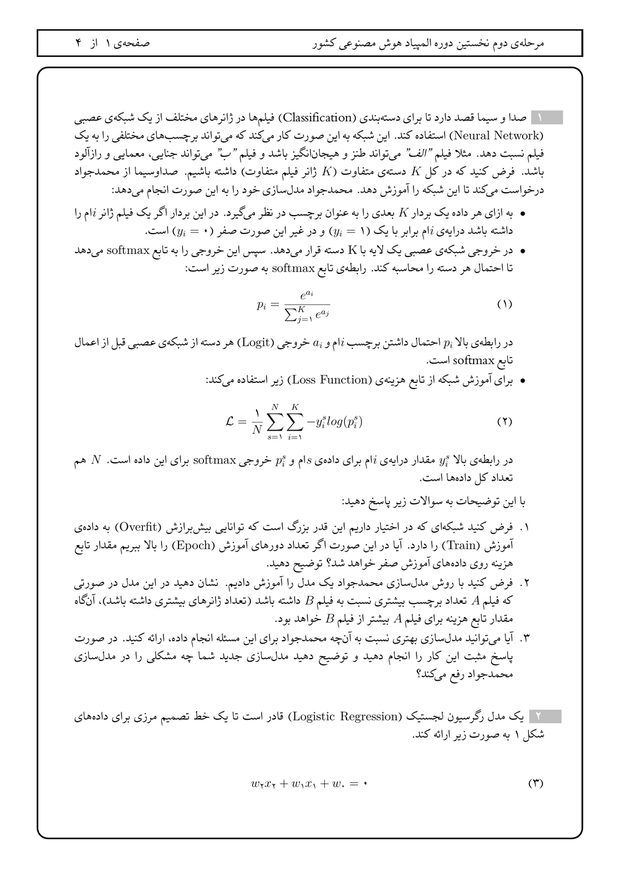
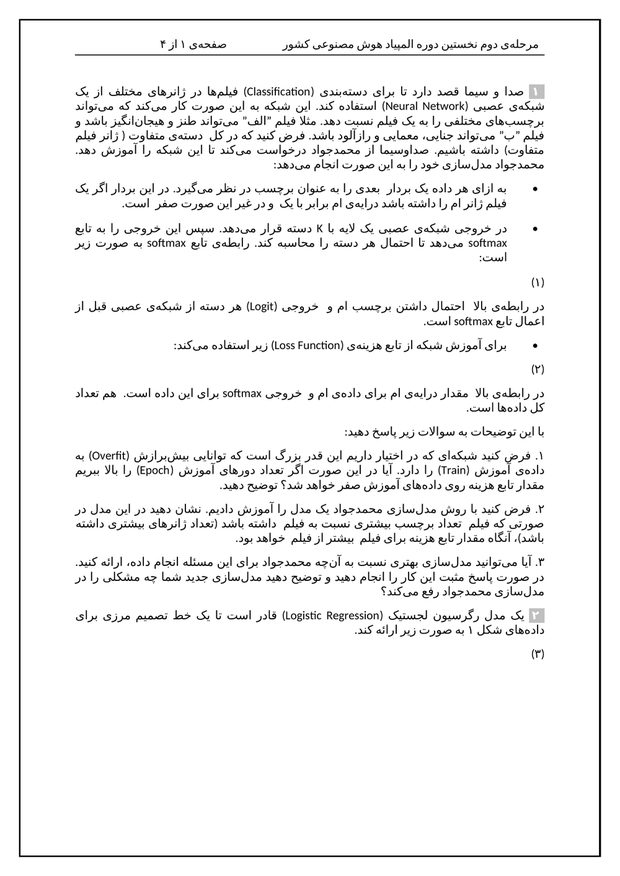
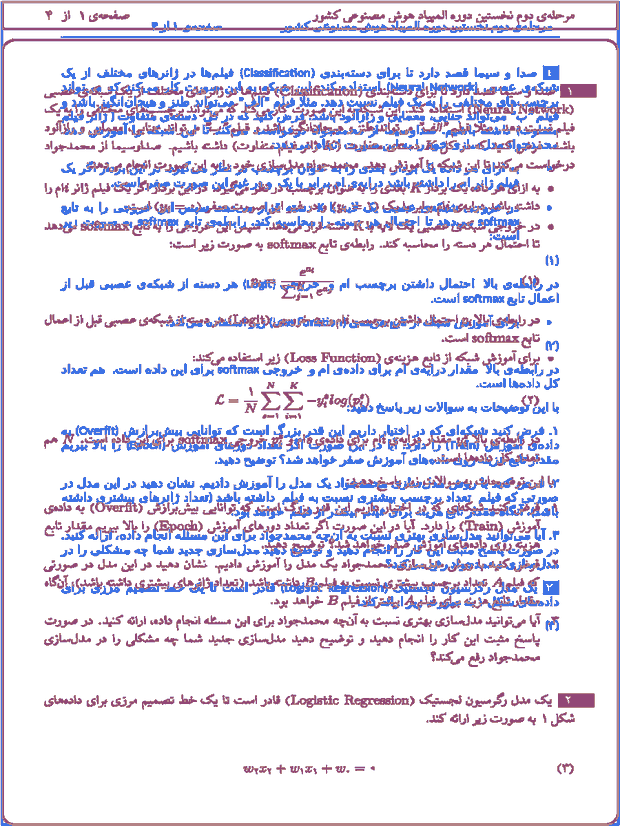
This is a real page from a national olympiad booklet, converted end to end. The left side is the Word file we produced; the right side is the original scan. The divergence map beside it marks in colour every pixel where the two disagree.
One upload. Every format the job actually needs.
Most of what people call OCR is really eight different jobs with eight different endings. A court needs a searchable PDF, an accountant needs a spreadsheet, an AI team needs Markdown with coordinates, a blind reader needs reflowable text. You choose the ending; the same verified reading feeds them all.
Word (.docx)
The facsimile. Page for page, real headings and tables, native editable equations, vector figures, headers and page numbers exactly as printed.
Searchable PDF
Your original scan with an accurate invisible text layer underneath. Required by a growing list of courts for e-filing, and the standard deliverable for archives.
Excel (.xlsx) and CSV
Tables lifted out as real tables — merged cells, multi-page continuations, and the original numerals preserved. For statements, transcripts, price lists and result tables.
Markdown and JSON
AI-ready: clean structure, page anchors and bounding boxes for every block, so a retrieval system can cite the exact page it answered from.
HTML
Semantic markup with the same structure, ready to publish. Mathematics ships as MathML, so it stays real mathematics.
LaTeX
For papers and theses: equations as LaTeX source, tables as tabular, figures as separate files with their captions attached.
EPUB3 and DAISY
Reflowable, screen-reader-correct, with proper language tags and pronunciation-safe Persian spacing. This is the opposite of page fidelity, and some readers need exactly that.
Plain text
Layout deliberately dropped, page boundaries kept and marked. For search indexes, corpora and language pipelines.
Start on your phone, finish on your laptop
Your history follows you. If a file was saved on another device, FullOCR tells you which device and where — so you never hunt for a download you made somewhere else.
One history, every device
Every conversion is listed with its date, source file, page count, formats and fidelity score.
Device-aware downloads
Open a past job on your phone and you are told plainly: this Word file was saved on your laptop, in this folder, under this name.
Re-download any time
Outputs stay in your account. Nothing expires quietly.
Pay for pages, not for seats
Our own model cost is $0.082 a page. Everything below is priced from that, not from a competitor's ad. There is no cheaper tier that skips the verification, because a document you cannot trust is not worth converting.
Every account starts with 5 free pages a month — no card, no watermark, all three formats.
Pages
Pay only for what you convert. No subscription, no seats.
$6 minimum order
- Word, HTML and plain text
- Two independent readings, then adjudication
- Equations compiled and made editable
- Figures redrawn as vector shapes
- Reprint-test fidelity report
- Standard queue, delivered within 12 hours
Studio
For researchers, publishers and translation offices working every week.
250 pages included, then $0.21 per page
- Everything in Pages
- 250 pages every month
- Priority queue
- Whole-book batch upload
- Certificate of conformance per job
- API access and Word add-in
Certified
When the document has to stand up to somebody else's scrutiny.
- Everything in Studio
- Human adjudication of every flagged region
- Character-to-pixel provenance for the whole document
- Signed certificate of conformance
- Insured accuracy guarantee
- For courts, archives and publishers
Two more ways to buy
Rush
Interactive queue — minutes instead of hours. Added to any per-page price.
FullOCR Desktop
Runs on your own Mac or PC with no internet. Produces an editable Word draft with a fidelity score and a map of the regions worth checking, and escalates only those pages to the full cloud protocol. One payment per major version, 100 escalation pages included.
Air-gapped node
The complete cloud protocol installed inside your own network, for institutions whose documents may never leave the building. Annual licence per node, with onboarding and protocol tuning.
Prices in US dollars. A free allowance of 5 pages a month needs no card. Volume above 5,000 pages a month is quoted individually.
Your documents are yours
Deleted on your schedule
Set files to be removed right after conversion, or keep them in your history. Either way, nobody else sees them.
No training on your files
Your uploads are never used to train anything.
Offline installation
For archives and institutions that cannot send documents anywhere, the whole pipeline can be installed inside your own network.
Frequently asked
How is this different from ordinary OCR?
Which languages can it read?
What file types can I upload?
Can I send a link instead of uploading?
Are the equations really editable?
What does the fidelity score mean?
Do you keep my files?
Can I run it on my own machine?
Send us your hardest page
The one with the table that never survives, or the formula that always breaks, or the Persian text that always reverses. That is the page we built this for.